
About Me
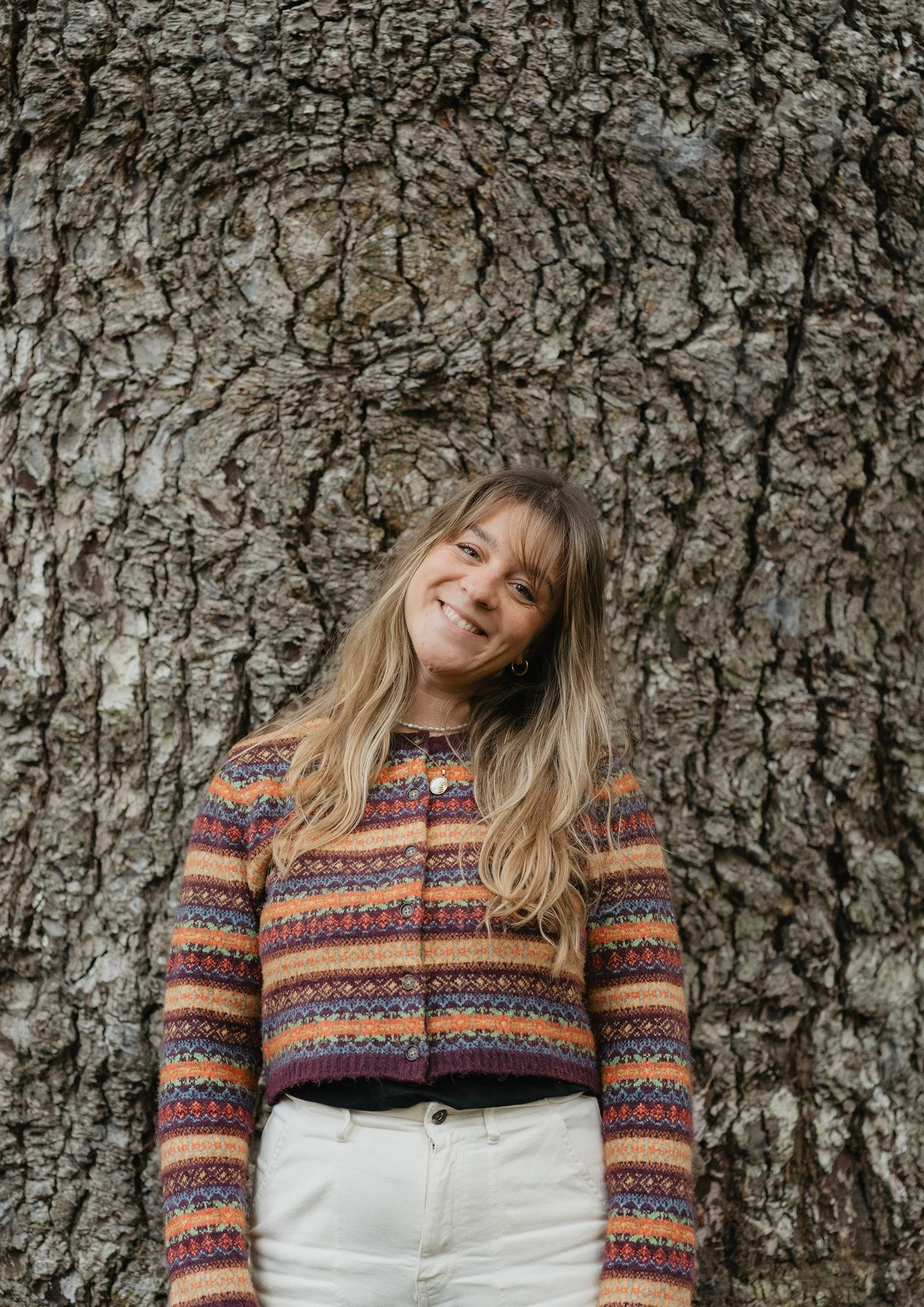
My passion for counselling grew from a deep curiosity about how early experiences shape us and how healing becomes possible when we are met with compassion and understanding.
With over six years of experience supporting clients in private practice and mental health services, I bring a warm, integrative approach to therapy.
I am also a qualified outdoor instructor, and I deeply value the therapeutic benefits of nature, movement, and holistic wellbeing.
My Why
Some might say I have always been very interested in how the mind functions; I chose Psychology as a subject in my A-Levels (or the German equivalent of that), and was always the one that stood by friends on their mental health journeys, when others maybe chose to step away.
At 18, whilst working as a nanny, I began to notice for the first time just how much childhood shapes us, and how early experiences settle deep in the soul and can quietly carry on. All these experiences stirred in me a sense of justice; the kind that longs to see healing and wholeness in people's lives — and this eventually translated into becoming a counsellor and supporting others on their healing journeys.
So much of what we do is learned; shaped by how we've interpreted the world around us, often long before we could make sense of it. I've found that when we meet ourselves, and others, with kindness and curiosity, we begin to make space for understanding and transformation.
Professional Development
I have completed a Diploma with Vital Connextions in Integrative Counselling in Edinburgh and added on an additional year to complete, and graduate, with 1st Hons from IICP in Dublin with a BSc in Integrative Counselling & Psychotherapy in 2023. I am a registered member of the BACP (British Association of Counsellors and Psychotherapists) and work under their line of Ethics.
I have 6 years of experience supporting clients both in-person and online, I’ve worked with a wide range of issues through local mental health agencies and services, as well as private practice and have developed my own integrative approach that draws on a blend of Person-Centred, Psychodynamic and solution-focused modules. I undergo professional development every year and have just recently completed a postgrad diploma in counselling young people and children.
I am also a qualified Outdoor Instructor and have taken individuals and groups on adventures since 2017. Many of my skills and experiences translate into my approach for the therapeutic benefits of nature and working outdoors. I also deeply value the role of nutrition in mental and emotional health and have seen how small changes can have an impact on our mental wellbeing. Although I am not a nutritionist, I can see how our connection to the natural world and the foods we nourish our bodies with can have a profound impact on our sense of self and vitality. I believe that true healing comes from looking at the whole person - body, mind, spirit and soul. I work with clients to explore how these elements can support their emotional and psychological growth, supporting you in achieving balance and well-being across all aspects of life.
My Approach / Modalities
(summarised just through chat)
As an integrative counsellor, I draw from a range of therapeutic approaches. I adapt my approach to suit your individual personality, goals, preferences and unique needs. I view each person holistically, recognising that your biology, life experiences, and personality all play a part in how you process emotions and navigate challenges. Together, we get to explore what works best for you.
Find more below on some of the approaches that make up my therapeutic foundation & work.
Person-Centred Therapy
Person-centred therapy comes from the idea that, given the right conditions, people naturally find their own way toward growth and healing — you don't need to be fixed, you need to be heard.
In this kind of therapy, the relationship between you and your therapist really matters. There's no agenda, no advice-giving, no being told what to do. It's about having a space where you can think out loud, feel genuinely accepted, and move at your own pace.
Over time, a lot of people find they come away with more confidence, a clearer sense of who they are, and a stronger trust in their own instincts.
Choice Theory
Choice Theory starts from the idea that everything we do, we do for a reason, and that reason is always an attempt to meet one of five basic human needs: connection, power, freedom, fun, and survival. This sits beautifully alongside Maslow's Hierarchy of Needs, both frameworks asking the same question: what do you need, and are you actually getting it?
A big part of this is what Glasser called your "Quality World", the inner picture you carry of what a good life looks like for you. Who's in it, what matters, what makes you feel like yourself. Therapy is about looking at whether the choices you're making are getting you closer to that picture, or quietly moving you further away.
It's an approach that puts you in the driver's seat. Not in a "just choose to be happy" way, but in a genuinely empowering one. You have more agency over your life than you might think.
Psychodynamic Therapy
Psychodynamic therapy works from the idea that a lot of what drives us: our reactions, our relationship patterns, the way we feel about ourselves - traces back further than we'd think.
This approach is really about asking why. Why do I keep ending up here? Why does this keep happening? And then tracing it back: All the way back! What's your origin story? What narratives were you told about yourself, about the world, about what you deserved, and when did you start believing them?
Positive Psychology
Positive psychology isn't about pretending everything is fine — it's about making sure that when we look at a person, we're seeing the whole picture. Not just what's hard, but what's strong.
This approach asks different questions. What's already working? What makes you feel alive, capable, connected? It draws on things like gratitude, meaning, and self-compassion — not as nice extras, but as genuinely powerful tools for lasting change. Not just surviving, but actually flourishing.
Cognitive Behavioural Therapy (CBT)
CBT is built on a pretty simple but powerful idea: the way we think affects the way we feel, and the way we feel affects what we do. And a lot of the time, those thoughts are running on autopilot.
This approach is about learning to notice that. To catch the thought before it spirals, name what's actually happening, and start to shift patterns that might have been running the show for a long time. It's practical, it's concrete, and a lot of what you work on in sessions you can actually take with you and use in real life.
And here's the really hopeful part — the brain can change. Neuroplasticity tells us that we aren't stuck with the pathways we've built. Every time we practise thinking or responding differently, we're literally carving out new routes. Old patterns can loosen, and new ways of being become possible.
Mindfulness-Based Therapy
Mindfulness is really just the practice of paying attention — to what's happening in your body, your thoughts, your emotions — without immediately trying to fix, judge, or escape it. Which sounds simple, but for most of us it goes against every instinct we have.
A lot of us spend our lives either replaying the past or bracing for the future. Mindfulness gently brings you back to right now. Through things like breathing exercises and guided awareness, you start to build a different relationship with your inner world — one where you're observing rather than being swept away.Over time that creates a kind of steadiness. Things still happen, but there's more space between the trigger and the reaction. And in that space, there's choice.